Danube River Cruise
The River That Will Change How You Think About European Travel
I've explored Europe countless times—its major cities, hidden villages, and iconic landmarks. I arranged tours for well over ten thousand people to Europe, and I thought I'd seen it all.
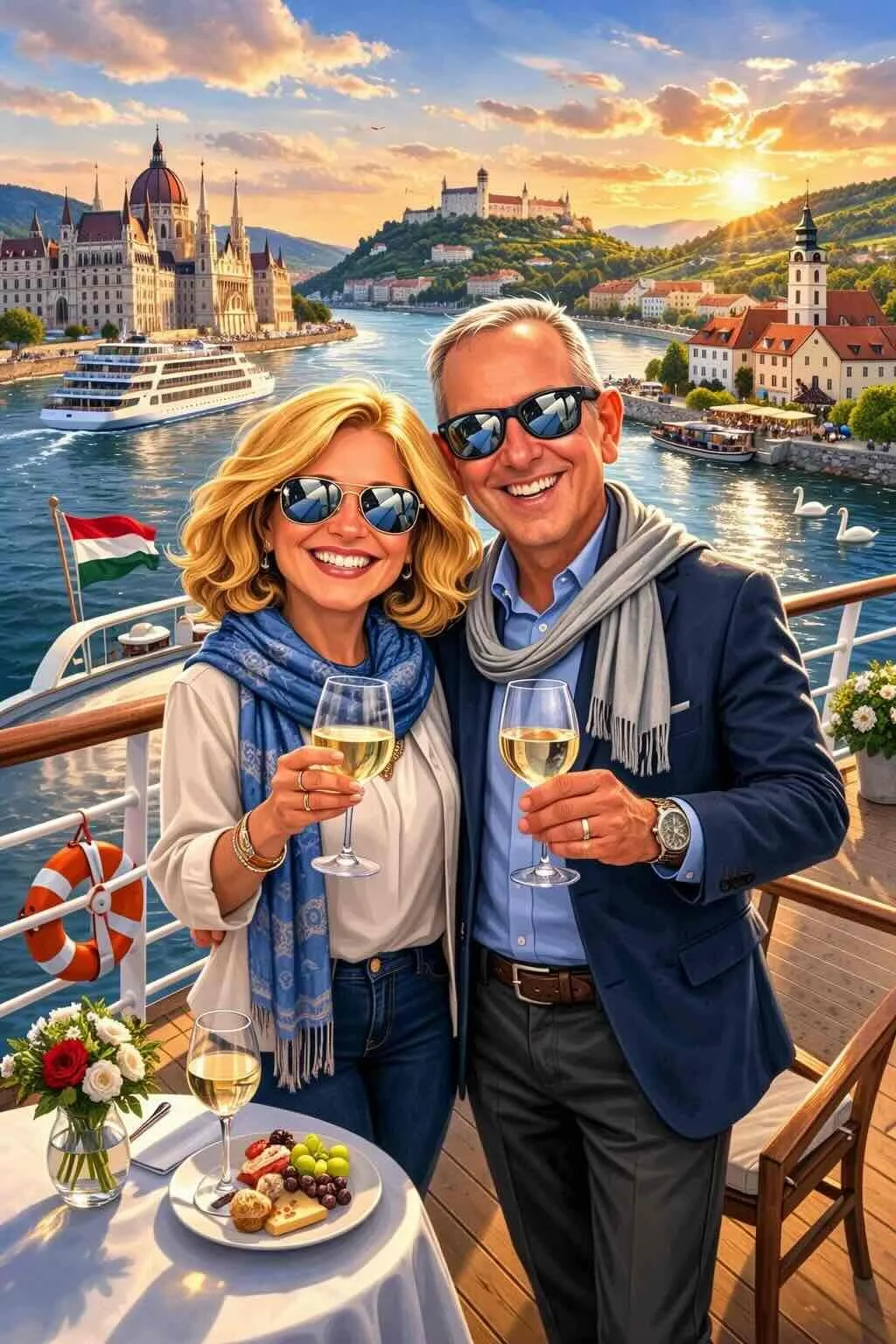
Rick & Tracey welcome you to cruise on the Danube
Then I discovered Danube river cruising.
Here's what surprised me: this wasn't just a different way to see Europe. It was a completely different experience of Europe. One that made me wonder why I'd spent so many years dealing with airport security lines, hotel check-ins, and wheeling luggage over cobblestones.
A Moving Hotel Through the Heart of Europe
Imagine this: You fall asleep in Vienna after an evening at a classical concert. You wake up in Bratislava. No packing. No checkout. No taxi to the train station.
Your room—sorry, your suite—moves with you. The Danube does all the work while you sleep.
But here's what truly sets river cruising apart: you're not just visiting cities. You're gliding through the landscape. Past medieval castles perched on hillsides. Through the dramatic curves of the Wachau Valley, where terraced vineyards have produced wine for a thousand years. Along banks where history unfolded for centuries.
Every morning, you open your floor-to-ceiling window (not a porthole) to a completely new vista. Sometimes it's the stunning architecture of Budapest's Parliament Building. Other times, it's a charming village you've never heard of but will never forget.
The Destinations That Surprised Me Most
Yes, Vienna and Budapest are magnificent. But some of my favorite moments happened in places I hadn't planned to fall in love with.
Dürnstein, Austria – This tiny Wachau Valley village, where Richard the Lionheart was once imprisoned, feels frozen in time. Cobalt blue church tower. Apricot orchards. Wine taverns where locals still gather. We had three hours here, and I could have stayed three days.
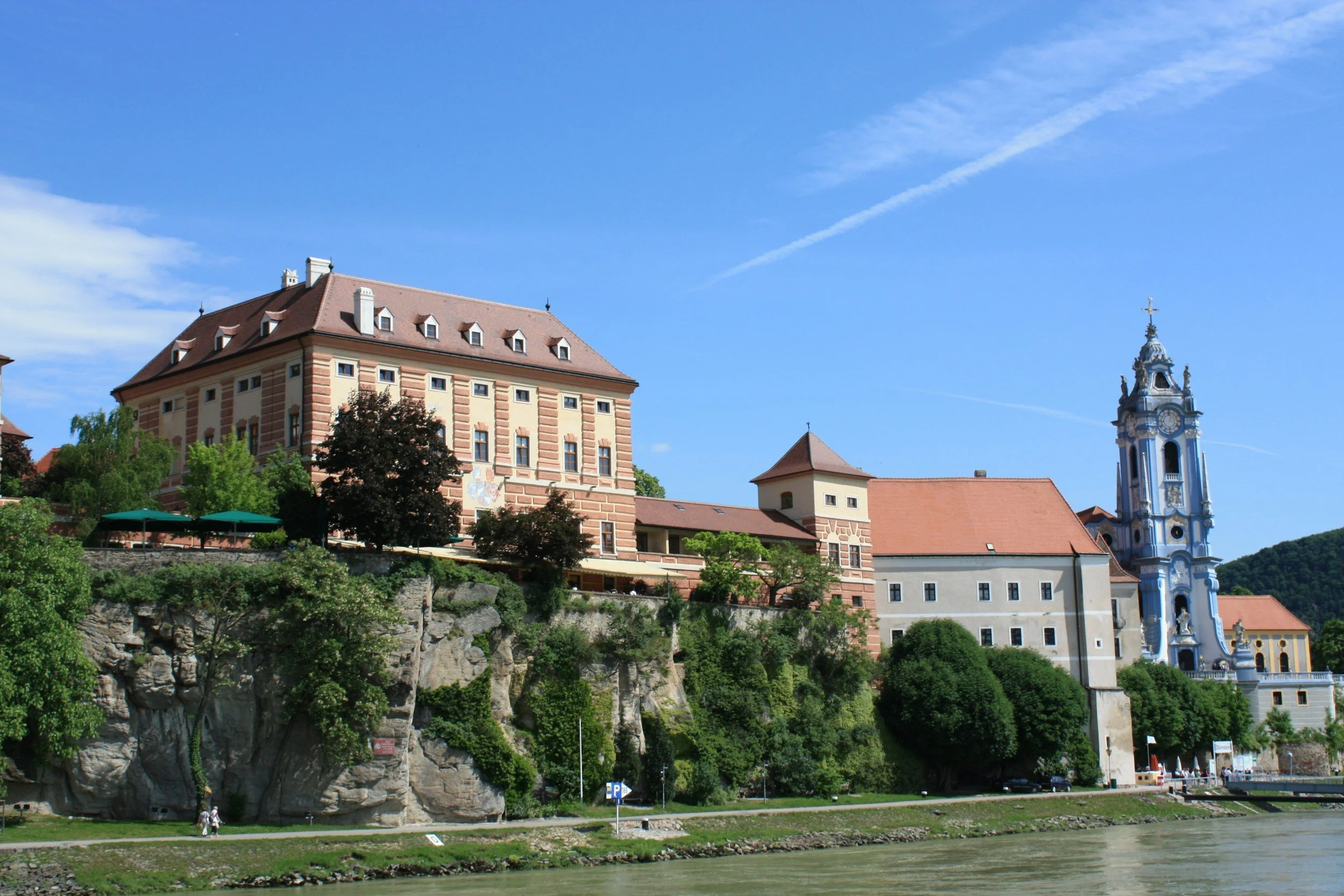
Wachau Valley - Dürnstein, Austria
Melk Abbey – Rising above the Danube like something from a fairy tale, this Baroque monastery isn't just beautiful—it's overwhelming. The library alone contains 100,000 volumes, some dating back centuries. It is not simply another church, but something unique and special.
The surprise stop in Regensburg – A medieval gem that most travelers skip, with a 900-year-old stone bridge and the oldest sausage kitchen in the world (seriously—it's been operating since 1135).
Why Emerald Gets River Cruising Right with a wealth of generous inclusions
Having experienced multiple river cruise lines, here's why Emerald stands out:
Space that actually matters. Emerald's suites start larger than many others, plus you get floor-to-ceiling windows with their unique balcony that can be converted to be used indoors or outdoors by lowering the window from the ceiling to a standard balcony rail height.
The included experiences are genuinely included. Many river cruise lines advertise "all-inclusive" but then charge extra for tips, Wi-Fi, and port charges, and some include only limited shore excursions. With Emerald, comprehensive shore excursions are included—even the special ones like EmeraldPLUS experiences or EmeraldActive, which provide you with the opportunity to experience each exciting destination from a different perspective and are designed for guests who enjoy moving at a faster pace. Head onshore for guided hikes and bike rides, or take to the water for a canoeing experience.
Flexible touring options. Some days you want the guided tour. Other days, you want to explore independently. Emerald provides both without pressure or judgment. They'll even lend you a bike at no cost for you to explore on your own.
The onboard atmosphere. With a maximum of 180 guests, it feels intimate rather than crowded. You recognize faces. Make friends. Actually, remember their names.
No nickel-and-diming. Wi-Fi, gratuities, all meals on board, including beverages such as wine, beer, and soft drinks with lunch and dinner—it's all included. You can truly unpack your wallet along with your suitcase.
The Food Revelation
I need to address something: I was skeptical about dining on a river cruise. How good could the food really be on a ship? I was completely wrong.
The ingredients are sourced locally as you move through regions. Fresh fish from the Danube. Austrian schnitzel made the traditional way. Hungarian goulash in Budapest that rivals anything you'd find in the city's best restaurants.
And because you're dining with the same small group throughout your journey, meals become social experiences. By the third night, you're not dining with strangers—you're sharing stories with friends.
Who This Journey Is Really For
River cruising isn't for everyone, and that's okay. But it's perfect if you:
- Want to experience multiple destinations without the exhaustion of constant packing
- Prefer immersive cultural experiences over resort relaxation
- Value learning and enrichment alongside beautiful scenery
- Appreciate not having to research restaurants, book tours, or plan logistics
- Want Europe at a civilized pace—not a whirlwind checklist
The Danube, specifically, is ideal for first-time river cruisers. The itinerary delivers iconic cities (Vienna, Budapest) alongside charming villages. The scenery is consistently stunning. The cultural experiences are rich and varied.
And unlike ocean cruising, you're never out of sight of land. The river winds through the landscape—you're always watching Europe unfold outside your window. Plus, the rivers are calm, with no waves.
A Different Kind of Journey
I've spent my career helping people explore the world. I've seen trends come and go. But river cruising on the Danube isn't a trend—it's simply the most elegant, stress-free way I've found to experience the heart of Europe.
If you've been curious about river cruising, or if you've "done Europe" and want to experience it differently, let's talk. The Danube might just change how you think about travel, too.
FAQ - Danube River Cruise Questions I'm Asked Most Often
-
Absolutely, and here's why: the Danube delivers both iconic cities and charming villages in a single journey. You get Vienna and Budapest—destinations most travelers already recognize—alongside smaller gems like Dürnstein and Melk. The variety means you experience grand European capitals, medieval towns, and vineyard landscapes all in one week. Plus, the Danube is wide and calm, making it ideal if you're testing whether river cruising suits you.
-
More than most travelers expect. All shore excursions—including EmeraldPLUS cultural experiences and EmeraldACTIVE options like guided bike rides and hikes. All meals include wine, beer, and soft drinks at lunch and dinner. Wi-Fi that actually works. Gratuities for crew and guides. Even bike rentals, if you want to explore independently. The only extras are premium spirits, specialty coffees, spa services, and a few niche specialty tours. Most travelers disembark having spent almost nothing beyond their cruise fare.
-
This surprised me too. Unlike ocean cruises where you're rushed through port stops, Danube itineraries typically give you several hours—often half a day—in each location. Because you're docked right in city centers, you walk off the ship, and you're there. No tender boats. No long bus transfers. In Vienna, we had time for a full morning tour and an afternoon on our own. In smaller villages like Dürnstein, three hours felt perfectly paced for wandering and wine tasting.
-
Honestly, this concern evaporates the moment you're on board. Rivers don't have waves. The water is calm. Even when passing through locks—where water levels change dramatically—the movement is so gradual you barely notice. I've watched travelers who get terribly seasick on ocean voyages have zero issues on the Danube. If motion sensitivity has kept you from cruising, rivers eliminate that concern entirely.
-
Only if you choose it to be—and that's the beauty. Some days you might want the guided walking tour and a leisurely afternoon on board. On other days, you can opt for the EmeraldACTIVE bike ride through Wachau Valley vineyards or a hiking excursion. Emerald provides options without pressure. The pace is civilized rather than rushed, but you're never stuck with limited choices. And because you're constantly moving to new destinations, there's always something fresh to experience.
-
Each river has its own personality. The Rhine emphasizes castles and Germanic wine regions. The Rhône showcases French gastronomy and Roman history. The Danube offers the most variety—grand imperial cities, medieval villages, dramatic vineyard valleys, multiple countries (Austria, Slovakia, Hungary, sometimes Germany and Czech Republic). Culturally, you're moving through the former Austro-Hungarian Empire, so there's a cohesive historical narrative that ties destinations together in a way other rivers don't quite match.
-
Emerald handles this beautifully. Every port offers guided excursions, but you're never required to join them. They provide clear maps, local tips, and even free bike rentals if you want to explore independently. In cities like Vienna or Budapest, many travelers skip the morning tour and simply wander on their own. The ship's central docking location makes independent exploration easy and safe. You get flexibility without sacrificing support.
-
Each season offers something different. Spring (April-May) brings blooming landscapes and fewer crowds. Summer (June-August) offers the longest days and warmest weather—perfect for outdoor excursions. Fall (September-October) delivers the wine harvest season in the Wachau Valley and stunning foliage. December brings Christmas market cruises with their own magical atmosphere. For first-timers, I often recommend spring or fall—comfortable weather, beautiful scenery, and not peak summer crowds.